In the News

In the News | Ford School News | Faculty News | Student News | Alumni News

621–640 of 1047

« Previous 1 230 31 32 33 3452 53 Next »

Panel study tracks wellbeing over the lifecourse and across generations

Monday, December 6, 2010

Co-director and principal investigator of the Panel Study of Income Dynamics (PSID), Professor Bob Schoeni is responsible for leading one of the most widely used social science data sets in the world—a longitudinal NSF-funded study that has collected 42 years of data on a vast, nationally representative sample of U.S. families.

[More]


Genetic gold rush hinders competition, innovation

Monday, December 6, 2010

Even before we had mapped the human genome, American entrepreneurs had begun to stake claims to it. Over the last two decades, the U.S. Patent Office has issued more than 5,000 patents on parts of the human genome, leaving an alarming 20 percent of our genes under the ownership of corporations, individuals, and universities. While some argue that this practice gives patent holders an incentive to pour money into research and develop genetic risk tests and disease interventions, many others, including Ford School assistant professor Shobita Parthasarathy, argue that patent ownership stifles innovation, decreases consumer options, and makes health care prohibitively expensive.

[More]


Blame it on the rain: early rainfall impacts health, wealth, and education

Monday, December 6, 2010

Their country straddling the equator, Indonesians know two basic seasons: dry and wet. However, the length of the rainy season can vary widely across this archipelago comprised of thousands of islands. Village farmers are used to this, and have adapted their agricultural practices over generations to accommodate the local climate and topography. But, when rainfall is unusual compared to normal levels in that village—for example when a drought strikes—crop yields can suffer dramatically. Interestingly, rainfall affects more than a single season's crops, explains economist and Ford School lecturer Sharon Maccini. For Indonesian women born in the 1950s through the 1970s, she's found that early life rainfall impacts health, wealth, and education far into the future.

[More]


Health economics and public policy

Monday, December 6, 2010

Another faculty member on loan from the University of Michigan this year is research professor Helen Levy, who was appointed this August to serve a one-year term as a senior economist for the Council of Economic Advisers (CEA)—an agency that provides the U.S. President with economic advice related to the formulation of domestic and international economic policy. Over the next year, Levy will serve with other CEA appointees at the White House to analyze economic research and empirical evidence, with the goal of formulating and recommendingnational economic policies designed to promote employment and economic growth.

[More]


Demand-side solutions to health disparities

Monday, December 6, 2010

Professor Jim House is on a research leave this year as a visiting scholar at the Russell Sage Foundation in New York City. From his office on the Upper East Side of Manhattan, he's writing a new book, tentatively titled Beyond Sicko and Health Care Reform, which explores the connections between education, income, employment policies, and public health. An extension of a conference and edited volume supported by the Russell Sage Foundation and the Ford School's National Poverty Center several years ago, House's book will take an integrative look at how policies designed to address social and economic concerns can have a big impact on the health of the people they touch.

[More]


Legislators, lobbyists, and health care reform

Monday, December 6, 2010

"Almost every month a new book comes out that impugns the integrity of lobbyists and legislators," says professor of public policy and political science Rick Hall, "that they're in bed together, that there's a corrupt conspiracy, that members are beholden to special interests, that they sell their votes for campaign contributions..." The reality—in health care legislation and other policy areas—isn't quite as racy.

[More]


Polling parents on children's health

Monday, December 6, 2010

Want to know what the nation thinks about childhood obesity, bullying, or genetic risk testing? Ask Dr. Matthew Davis, an associate professor at the Ford School and the Medical School. As director of the C.S. Mott Children's Hospital National Poll on Children's Health, he and his team have reported on dozens of timely and often policy-relevant topics to gauge parents' experience with and opinions about current trends and issues in children's health and health policy.

[More]


Health care reform act unfolding, shifting the field

Monday, December 6, 2010

This September, the U.S. Census office announced that 14.3 percent of Americans are living in poverty, and 16.7 percent (50.7 million) are uninsured. The Patient Protection and Affordable Care Act signed into law eight months ago will welcome 32 million of these to the rolls of the insured. Whether you love it or hate it, this reform is shifting the landscape of the U.S. health system. Ford School alumni with health policy expertise share their insights on the landmark changes, and talk about how these policies are impacting their work in the field.

At the base of Capitol Hill, kitty corner to the United States Botanic Gardens, sits the Office of Legislation for CMS, the Centers for Medicare and Medicaid Services. Jennifer Boulanger (MPP '87), deputy director of that office (where she has worked on and off for more than two decades), talks about the role her staff played in the Affordable Care Act, and what they're working on now.

[More]


Health policy diffusion both horizontal and vertical

Monday, December 6, 2010

Across the nation, cities have been pioneers in restricting restaurant and workplace smoking, and making it harder for children to acquire cigarettes. As a political scientist, Professor Chuck Shipan’s work seeks to understand how these policies spread—both horizontally to other cities, and vertically to states—and to draw broader implications for those interested in policy diffusion.

[More]


Local leaders open to regional partnerships-maybe

Friday, December 3, 2010

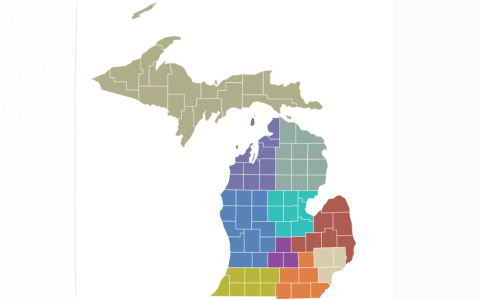
Government leaders in struggling communities across the state tend to be open to combining services with other towns, a new University of Michigan study finds.

However, government officials who favor expanding regional planning are less supportive of working through existing regional institutions—they want to create new entities to pursue cooperation, said Elisabeth Gerber, a professor at the Gerald R. Ford School of Public Policy.

[More]


Shobita Parthasarathy interviewed by German Public Radio about legality of human gene patents

Wednesday, December 1, 2010

Shobita Parthasarathy was interviewed by German Public Radio about recent debates on the legality of patenting human genes. Since a narrowly decided Supreme Court ruling in the 1980s, the U.S. Patent Office has allowed patents for a variety of life forms, including human gene sequences. This practice, however, has recently come into question. In March, a New York judge invalidated Myriad Genetics' patents on the BRCA genes, thought to cause breast and ovarian cancer, and the case is under appeal. And in October, in a very surprising move, the Obama administration declared that it also considered genes unpatentable, because they are "products of nature." Parthasarathy, an expert in genetics and biotechnology policy, supports the recent court decision and the Obama administration's decision. Those on the other side of the debate worry that the loss of patents will decrease investment in innovation and, ultimately, will hurt research and hea

[More]


Matthew Davis quoted in Health Day article about gun safety

Wednesday, December 1, 2010

Matthew Davis was quoted in a Health Day news article called "Gun-Safety Talk a Safe Bet for All Families." The article, published in Business Week, presents the results of a new C.S. Mott Children's Hospital National Poll on Children's Health, which found that only 48 percent of parents without firearms have discussed gun safety with their children.

[More]


Ford School students attend 2010 UN Climate Change Conference

Monday, November 29, 2010

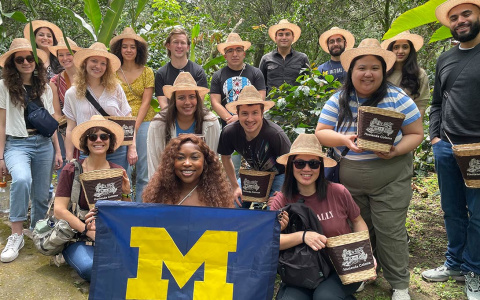
Two Ford School MPP students, Katlego Moilwa and Marisol Ramos, will travel in a group of thirty University of Michigan students, alumni, and faculty to Cancun, Mexico will travel in a group of thirty University of Michigan students, alumni, and faculty to Cancun, Mexico for the 2010 United Nations Climate Change Conference. The conference, lasting ten days, will also serve as the 16th Conference of the Parties of the United Nations Framework Convention on Climate Change (COP) and the 6th Conference of the Parties serving as the meeting of the Parties to the Kyoto Protocol (CMP).

[More]


Diversity Center issues call for proposals

Monday, November 22, 2010

The Center for Public Policy in Diverse Societies has issued a call for project proposals that contribute to academic research on diversity or enrich the broader community’s engagement with issues of diversity. Up to four proposals—of two different types—will be funded. Policy-oriented research grants may receive up to $6,000 per award and program grants—intended to engage the community—may received up to $2,000 per award. The submission deadline is December 10, 2010; awardees will be notified by February 1, 2011.

[More]


Susan Dynarski quoted in Wall Street Journal blog, "The Conflicting Charter-School Numbers"

Friday, November 19, 2010

Susan M. Dynarski was quoted in a Wall Street Journal blog about the research comparisons of student performance at charter schools versus traditional schools. Though many charter schools use a lottery system to select students, the systems aren't standardized. "The states require the lotteries, [so there is] no reason they cannot be more standardized," Susan Dynarski told the Wall Street Journal. "It's such a waste! We have little randomized trials going on all over the country, and we could learn so much from them. [It] makes a researcher’s heart break."

[More]


Former Ford School Dean Rebecca Blank named Acting Deputy Secretary of Commerce

Thursday, November 18, 2010

The U.S. Commerce Department announced today that Rebecca Blank, currently the Under Secretary for Economic Affairs, will become its Acting Deputy Secretary. In her new, temporary role, she will focus on matters of management and policy for the department's 12 bureaus, functioning as Commerce's chief operating officer.

[More]


Matthew Davis quoted in ABC News story, “FDA May Ban Caffeine from Alcoholic Drinks”

Wednesday, November 17, 2010

Dr. Matthew Davis was quoted in an ABC News story about the U.S. Food and Drug Administration’s expected ban of caffeine infused alcoholic beverages. A few states—including Michigan—have already banned these beverages, citing health and safety concerns.

[More]


Brian Jacob's work cited in Inside Higher Ed article, “Cheating and the Generational Divide”

Wednesday, November 17, 2010

Brian A. Jacob's work was cited in an Inside Higher Ed article about shifting generational views of academic dishonesty. In the wake of a hotly debated cheating scandal at the University of Central Florida, many researchers are weighing-in on the shifting norms around academic cheating and plagiarism.

[More]


CLOSUP report about local economic development featured in various media outlets

Tuesday, November 16, 2010

Tom Ivacko was interviewed on Michigan Radio about a Center for Local, State, and Urban Policy (CLOSUP) survey about a relatively new economic development strategy: "economic gardening." The term describes activities that local communities engage in to cultivate and develop existing businesses, rather than simply recruit new ones.

[More]


621–640 of 1047

« Previous 1 230 31 32 33 3452 53 Next »


News RSS